Keeping a vehicle’s paint looking new can be difficult, especially with daily exposure to rock chips, road debris, bugs, scratches, UV rays, and environmental contaminants.
That is where Paint Protection Film (PPF) comes in.
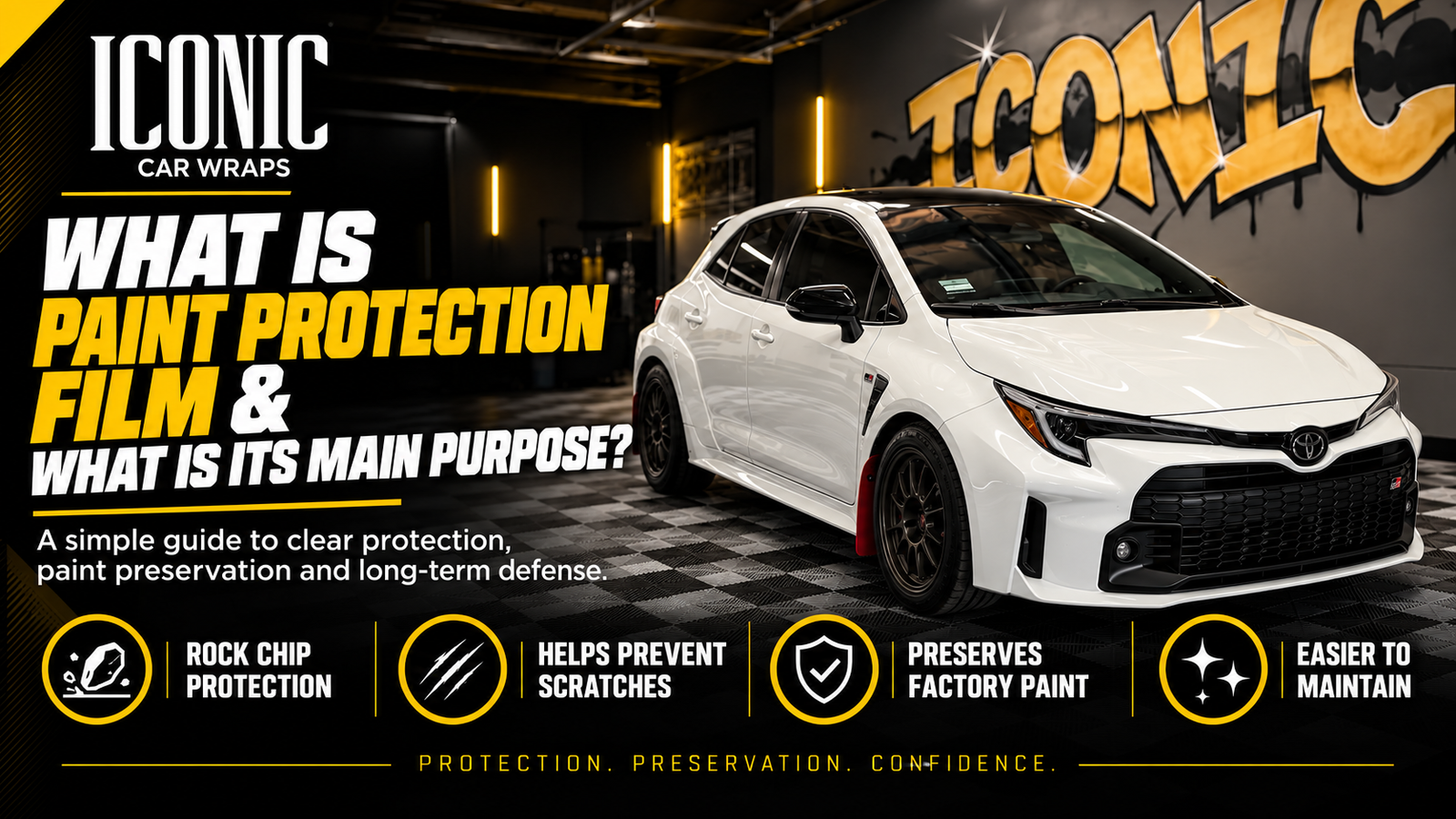
PPF is a clear or specialty automotive film applied over painted surfaces to create a physical barrier between your vehicle’s paint and everyday road hazards. Its main purpose is simple: help protect the original paint from physical damage while preserving the vehicle’s appearance and value.
What Is Paint Protection Film?
Paint Protection Film, commonly called PPF, is a durable transparent polyurethane film professionally installed over a vehicle’s painted surfaces.
Unlike waxes or ceramic coatings, PPF provides a physical layer of protection over the paint.
It is commonly applied to high-impact areas such as the hood, bumper, fenders, mirrors, rocker panels, and other surfaces that regularly face road debris.
Modern PPF can also be available in different finishes, including clear gloss, matte, satin, and colored options.
What Is the Main Purpose of PPF?
The primary purpose of PPF is to protect your vehicle’s paint from physical damage.
While ceramic coatings are excellent for gloss, hydrophobic performance, and easier cleaning, PPF is specifically designed to absorb or reduce damage from impacts and abrasions.
PPF can help protect against:
- Rock chips and gravel
- Light scratches and scuffs
- Road debris
- Bug splatter
- Bird droppings
- Road grime
- Minor abrasions
- UV exposure and environmental contamination
No protective film can make a vehicle completely damage-proof, but professionally installed PPF can significantly reduce common everyday paint damage.
How Does Paint Protection Film Work?
PPF creates a durable sacrificial layer over the factory paint.
Instead of road debris striking the clear coat directly, the film takes the impact first.
Many modern films are engineered with advanced top coats that can also offer properties such as:
- Self-healing of very light surface marks
- Stain resistance
- UV resistance
- High optical clarity
- Gloss enhancement
- Easier maintenance
The exact performance depends on the film manufacturer, product line, installation quality, and maintenance.
What Areas of a Car Can Be Protected With PPF?
PPF can cover almost any painted exterior surface.
| PPF Coverage Area | Why It Is Commonly Protected |
|---|---|
| Front Bumper | Receives frequent road debris and bug impacts |
| Hood | Common target for rock chips |
| Front Fenders | Exposed to debris around the front wheels |
| Side Mirrors | Frequently hit by bugs and small debris |
| Rocker Panels | Vulnerable to stones and road grime |
| Door Edges | Helps reduce chips and minor contact damage |
| Rear Wheel Area | Often exposed to debris thrown by tires |
| Full Vehicle | Provides broader paint protection |
The right coverage depends on your driving habits, budget, vehicle type, and desired level of protection.
Full Front PPF vs Full Body PPF
Not every vehicle needs full-body coverage.
Full Front PPF
A typical full-front package may include:
- Front bumper
- Full hood
- Front fenders
- Side mirrors
- Headlights where appropriate
This option is popular because the front of a vehicle receives the majority of road impacts during normal driving.
Full Body PPF
Full-body PPF protects nearly all painted exterior panels.
This is often preferred for:
- Luxury vehicles
- Exotic cars
- New vehicles
- High-value vehicles
- Owners who want maximum paint preservation
Full-body protection can also make sense for drivers who want matte, satin, or colored PPF across the entire vehicle.
Does PPF Really Protect Against Rock Chips?
Yes. Rock-chip protection is one of the main reasons PPF exists.
The film helps absorb the energy from small stones and road debris before they directly strike the clear coat.
However, the level of protection depends on impact speed, object size, film thickness, and where the film is installed.
Extremely hard impacts can still damage both the PPF and the paint underneath.
Does Paint Protection Film Prevent Scratches?
PPF can help reduce many light scratches, scuffs, and wash-related marks, especially when the film has a self-healing top layer.
But PPF should not be considered scratch-proof.
Deep scratches, sharp objects, or significant impacts can still damage the film.
The advantage is that damaged PPF can often be replaced on the affected panel without requiring the original paint to be refinished.
PPF vs Ceramic Coating
PPF and ceramic coating protect your vehicle in different ways.
| Feature | PPF | Ceramic Coating |
|---|---|---|
| Rock Chip Protection | Excellent | Very Limited |
| Light Scratch Protection | Strong | Limited |
| Hydrophobic Properties | Good to Excellent | Excellent |
| UV Resistance | Yes | Yes |
| Gloss Enhancement | Excellent | Excellent |
| Chemical Resistance | Strong | Strong |
| Physical Barrier | Yes | No |
| Easier Cleaning | Yes | Yes |
Many vehicle owners choose to combine PPF and ceramic coating.
PPF protects against physical damage, while ceramic coating can make the protected surface easier to wash and maintain.
Does PPF Change the Appearance of Your Car?
Clear PPF is designed to be highly transparent and preserve the original appearance of the paint.
A quality installation should blend naturally with the vehicle.
You can also intentionally change the appearance using:
- Matte PPF
- Satin PPF
- Colored PPF
- Black PPF
- Specialty finishes
This gives drivers the ability to combine styling and protection.
Is Paint Protection Film Worth It on a New Car?
A brand-new vehicle is often one of the best candidates for PPF because the paint is still in excellent condition.
Installing PPF early can help prevent damage before rock chips and scratches accumulate.
It can be especially worthwhile if you:
- Drive frequently on highways
- Have a new or expensive vehicle
- Want to preserve factory paint
- Plan to keep the vehicle long-term
- Care strongly about resale condition
- Drive in areas with frequent road debris
Protecting original paint is usually easier than repairing damaged paint later.
Can PPF Help Preserve Resale Value?
Vehicle condition often plays an important role when selling or trading in a car.
PPF can help preserve areas that commonly develop chips, scratches, and wear.
A well-maintained exterior with clean original paint may be more appealing to future buyers than one requiring extensive paint correction or refinishing.
PPF does not guarantee a specific resale value, but it can help preserve the condition that buyers often care about.
How Long Does Paint Protection Film Last?
PPF lifespan varies depending on the product and how the vehicle is maintained.
Factors include:
- Film quality
- Installation quality
- Sun exposure
- Driving conditions
- Storage
- Washing habits
- Climate
- Maintenance
Premium films can last for many years when professionally installed and properly maintained.
Always check the specific manufacturer warranty and care recommendations for the film being installed.
How Do You Maintain PPF?
PPF is relatively easy to maintain.
Use gentle automotive washing techniques, clean microfiber towels, and products compatible with protective film.
Avoid aggressive brushes, harsh chemicals, and high-pressure washing directly against exposed film edges.
Contaminants such as bird droppings, tree sap, and bugs should also be removed promptly.
Can PPF Be Removed?
Yes.
Quality automotive PPF is designed to be removable.
Professional removal is recommended, especially after the film has been installed for several years.
When properly installed over healthy factory paint and professionally removed, quality film is designed to come off without damaging the original finish.
Vehicles with repainted or compromised paint may require additional evaluation before installation or removal.
Is Paint Protection Film Worth the Investment?
PPF can be a valuable investment for drivers who want stronger protection than wax or ceramic coating alone can provide.
It is particularly useful if your main concerns are:
rock chips, scratches, road debris, preserving original paint, and maintaining your vehicle’s appearance over time.
The most important factors are using quality film and choosing an experienced installer who understands surface preparation, film placement, stretching, edges, seams, and finishing.
Professional Paint Protection Film in Mission Viejo, CA
If you want to protect your vehicle from rock chips, scratches, road debris, and everyday paint damage, professional PPF can provide a strong long-term solution.
For expert Paint Protection Film installation in Mission Viejo, CA, trust Iconic Car Wraps. Serving Mission Viejo and nearby Orange County communities, Iconic Car Wraps provides professional PPF installation with careful surface preparation, precise coverage, clean edges, and attention to detail. Whether you need front-end protection or broader vehicle coverage, their team can help you choose the right PPF solution to preserve your vehicle’s finish and keep it looking its best.